Tuesday, October 30, 2018

My Experience of Tihar Festival


Tihar, known as Deepawali; Yamapanchak and also the festival of lights is one of the most dazzling of all Hindu festivals. We worship Goddess Laxmi, the Goddess of wealth or fortune. It is a five days festival which comes soon after the Dashain festival. This festival is all about worshipping of different animals such as crow, dog, cow and worshipping of the Hindu Goddess of Fortune or Wealth (Goddess Laxmi).
 
Kaag tihar:
It is the first day of tihar. On this day, I gave some food to crow and worshipped it.

Kukur tihar:
It is the second day of tihar. On this day, I worshipped street dog and gave some food to it.

Laxmi Puja:
It is the third day of  tihar. In the morning, cow is worshipped and in the evening goddess Laxmi is worshipped. On this day,  I went to the temple and worshipped the cow in the morning whereas I decorated my house with flowers, lamps and candles to welcome Laxmi the Goddess of wealth. I also decorated the ghada and knitted garland for my brothers. I made rangoli and illuminate it as well as  house with twinkling diyos.

Govardhan Puja:
It is the fourth day of tihar. On this day, I made sel and roti to help my mother. In evening, I wrapped kismis for my brothers and maternal uncle.

Bhai Tika:
It is the fifth and last day of tihar. On this day, I took bath early in the morning. I too helped my mother to make different items. I and my sister put a seven-coloured tika on the foreheads of our brothers and pray for their long lives and prosperity. We garland them and offered them good foods, sweets and fruits. My brothers too put tika on my forehead and gave me gifts and dakshina.

 Though Tihar festival is so useful; it is not free from evils. Gambling should be discouraged among the people. It is a blot on this happy day. Festivals like tihar are the only occasions for showing the social and religious spirit of the nation.

Wednesday, September 26, 2018

Question & Answer (Q/A)

    1) What is abacus?
Ans: Abacus was the first mechanical computing device developed by the Chinese between 500 and 600 B.C.E.


Related image

Note: Abacus could perform simple calculations such as addition and subtraction by shifting the beads which is present in it from one side to another.


    2) What is cyber crime?
Related imageAns: The crime related to computer system and cyberspace is called cyber crime. In other words, cyber crime is the criminal or illegal activities involving the information technology with the help of computers.


Note: This type of crime is prevalent in modern technological society and is becoming more high profile as a greater number of serious crimes. Cyber crime is growing fast because of the evolution of technology is fast, but the evolution of law is slow.


Saturday, September 15, 2018

Festival : Teej

Teej is a festival mainly celebrated by Nepali women for the long life of her husband and long and firm relationship between them until the death this life and all the lives to come. Teej is observed for marital happiness, well-being of spouse and children and purification of own body and soul. Teej is the most famous festival among Nepali women where both married and unmarried women take fast for long life of their life partner.

It is celebrated on 3rd day of Bhadra Shukla Paksha according to Nepali lunar calendar. It generally falls in late August or early September. Teej is mainly celebrated for three days. The first day is known as Dar Khane Din. On this day all the family members especially the women, both married and unmarried gather at one place, in their finest outfits of red called Saubhagya. This evening the grand feast takes place. The grand feast is called “Dar”. The fun often goes on till midnight, after midnight the 24-hour fasting starts.

The second day is the main day of Teej (the fasting day). Some women take it very rigid, they even live without a piece of food and drops of water while some others take liquid and fruit. On this day, they happily dress in red, married women wear their lagan ko pote, natthi, other jewelries and chadke tilahari ( jewelries are optional but chadke tilahari, lagan ko pote and natthi is said to be most important) and visit a nearby Lord Shiva’s temple singing and dancing all the way.The most important part of the pooja is mostly done in the evening burning the oil lamp (108 sute batti in a diyo) which should be burning throughout the night. It is a tradition of giving the diyo of teej by her mother in law to the married woman. Women get up early in the dawn and get cleaned and do the pooja once again to the diyo and goddess Parvati. Only after this pooja, women take solid food. 

This third day of Teej is Ganesh Chaturthati. Women eat Karkalo with (puree) food made with pure ghee. The fourth day of the festival is known as Rishi Panchami. After the completion of the previous day's pooja, women pay homage to various deities and bathe with red mud found on the roots of the sacred Datiwan bush, along with its leaves. This act of purification is the final ritual of Teej, after which women are considered forgiven from all their sins. The recent years have witnessed an adjustment in the rituals, especially regarding the strictness, but its spirit remains the same. On this day, the seven sages of the Hindu pantheon are worshiped by women in a belief that it will cleanse all sins of the previous year. Womenfolk take a holy bath with red mud found on the roots of the sacred Datiwan bush, along with its leaves. After three hours of rigorous cleansing, they come out purified and absolved from all sins. After this they sit in a semicircle while a priest sitting in the middle chants devotional prayers.

Teej is a cultural festival in which women dance and sing songs at home, temples and nearby public places. It is a traditional festival where women also express their pains through the lyrics of the songs they sing while dancing.

Saturday, September 8, 2018

MY FATHER

Image result for father's day quoteImage result for father's day quote


A father is someone everyday who has a day full of profound reflection and that is with regard to his children and family. He is the most important member of the family whose love for his children is just like oxygen for the survival of the lives. There’s nothing that big that he could not do for his family and there’s no such sacrifice that he will not do.

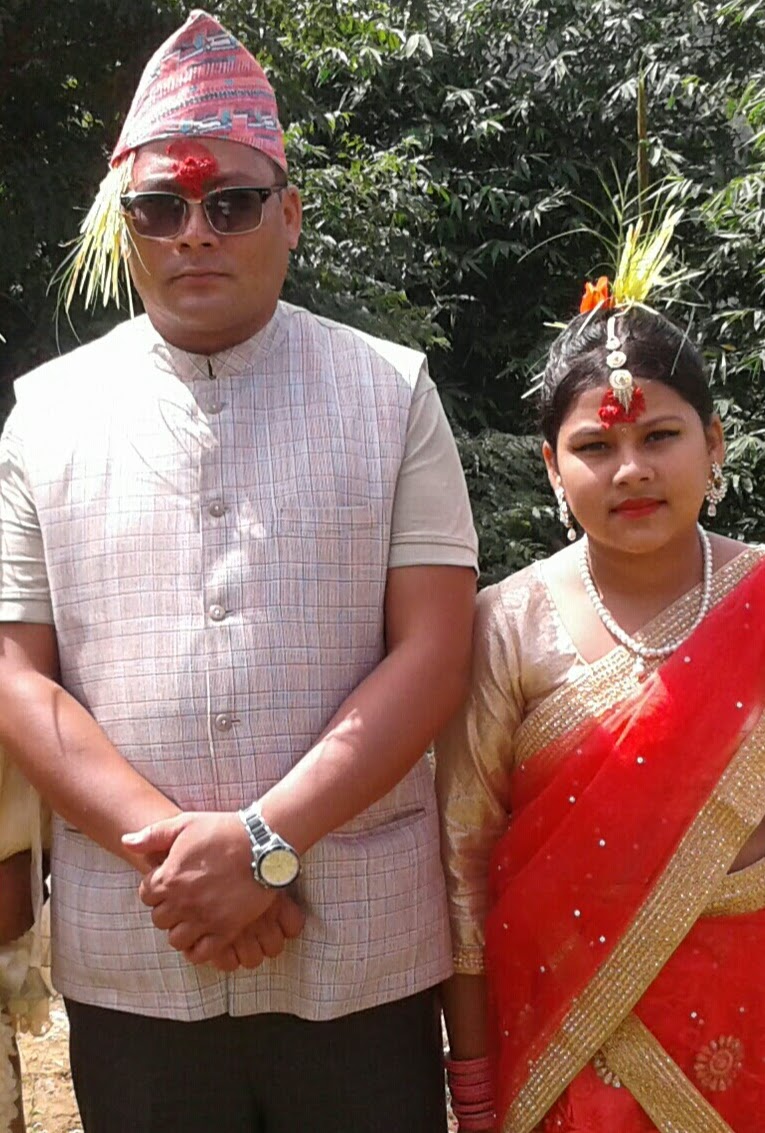
It is the quality possessed by my father too. My father's good name is Basanta Khadka. He is in late 30s. It's my father who encourages me to be best in my class. He is the reason that makes me understand what’s wrong and what’s right and stops me from acquiring the bad and unethical ways of life. My father is very honest, courageous, hard working, good natured and very friendly person. My father is disciplined and he does not like to quarrel with others. He completes his work in time and sticks to his schedule and is always punctual. He is always polite. He believes in the powers of words, and makes sure his words do not hurt anyone. 

My father wants me to be a good human being with high morals. He believes in simple living, high thinking. My father is an ideal and role model for me. I love my father. He the best father in the world. I want to make my father proud of me, so I'm trying my best to work hard and achieve my goal. I'm very grateful to him for giving me such a prosperous life.

Monday, August 27, 2018

GAI JATRA

Image result for gai jatra festival
Gai is cow and Jatra is Procession (Festival). Gai Jatra festival, the procession of cows, generally falls in the month of Bhadra, which correspond to English Calendar months of August/September. This year Gai Jatra is on August 27,2018. That is on Bhadra 11, 2075 BS. The festival of cows is one of the most popular festivals in Nepal. It is said people in ancient time started worshiping Yamraj,"the god of death" on this day.

However, the modern form of celebration of Gai Jatra came into existence in the medieval period of Nepal during the reign of Malla Kings. The present form of Gai Jatra with humorous acts, parody, comedy and was started by then King of Kathmandu Pratap Malla. He made Rani Pokhari (Pond) in the heart of Kathmandu and build a temple in the middle of the same pond.

Image result for gai jatra festivalTraditionally every family who had death in the family during the preceding year must participate in a procession through the streets of Kathmandu leading a cow. If a cow is unavailable then a young kids dressed as cow is considered a fair substitute. However, there started tradition of leading a cow with kids in funny costumes.


Pratap Malla, lost his very young son. His wife, the queen was in great misery. The king was very disappointed to see the condition of his queen. King after millions try could not make queen smile. Pratap announced that anyone who could make the queen laugh would be rewarded adequately.
Pratap Malla asked to bring the cow procession before the sad queen.  Then people tried their best with different costumes and humorous acts. The dance and procession finally gave queen smile on her face. The smile at the moment was temporary but the procession gave queen a big relief. She knew that there are several death in the city during the period and she is not alone. Death is the natural phenomenon and no one has control on it.

Hence, from the day King Pratap Malla started the tradition of cow procession with boys with different funny make ups in funny costumes. The boys even put tails and make up like monkeys and Hanuman walk through the city road to show people that the death is the truth in the life and every one has to face it one day. The Gai Jatra tradition slowly developed into doing humorous acts including jokes, satires, mockery and lampoon in the Gai Jatra days.

After the cow procession is over, in the afternoon, everyone takes part in another tradition in which the participants dress up and wear masks. There also people enjoy the moments with songs, jokes, mockery and humors until late evening. Gai Jatra is a festival which enables people to accept the reality of death and to prepare oneself for the life after death. It heals the grief and sorrow, at least a little, when people see the cow possession and realize people die, and we are not alone in the country who lost our loved ones.

JANAI PURNIMA

Image result for janai purnima essayJanai Purnima is one of the great Hindu festivals of Nepal celebrated all over the country. This festival is about the sacred thread. It lies in the full moon fortnight of Bhadra and August in Gregorian. Brahmans and Chhetris in Nepal change their sacred thread known as Janai on this day from Gurus, after taking a holy bath in the river.
Related imageThis full moon day sees a large number of Brahmans at the holy riverbanks. They take ritual dips in the water and offer ablution to the gods. They then change their sacred threads. Brahman priests tie yellow sacred threads around the wrists of the faithful. Newars of Kathmandu Valley call this festival Gunhi Punhi and they prepare a soup of a mixture of beans called Kwati as special food for the day. Kwati is a nutritious soup made from sprouted beans. 
In this festival thousands of devotees worship lord Shiva at Pashupatinath in Kathmandu and Kumbeswor in Lalitpur and take holy dips in ponds and lakes to eradicate their sins. A very great religious fair takes place at Gosaikunda lake in Rasuwa District. Ganga Dhanus Sagar at Janakpur and Tribenidham mela is also observed in this day.

RAKSHA BANDHAN

Image may contain: 20 people, people smilingRaksha Bandhan is one of the main festivals in Hindu religion. Although it is celebrated across India, it holds special reference for those belonging to the northern and western parts of the country.
The term 'Raksha Bandhan' means "bond of protection". The festival is observed on the full day of the Hindu luni-solar calendar month of Shrawan, which typically falls in Gregorian calendar month of August. The priests in the country announce special time for tying rakhi on the day of Raksha Bandhan. The atmosphere is filled with love and joy. The ritual begins with sisters applying tilak on their brothers’ forehead. They then tie rakhi on their brothers’ wrist and exchange sweets. Sisters wish for the well being of their brothers as they carry out the ritual. Brothers give gifts to their sisters and promise to take care of them in every situation. It is not only a special day for brothers and sisters but is also a great occasion to bond with other family members.Image may contain: 12 people, people smiling
The advancement in technology has also helped in bringing the loved ones together on this day. The siblings living in distant lands can connect with each other via video call. Those who are unable to visit each other on rakhi celebrate the festival by seeing each other virtually on phone or laptop these days.

CLOUD COMPUTING: A CONTEMPORARY TECHNOLOGY

Today's world is highly dependent or reliant on computers and the internet than ever before. With the passage of time contemporary techn...